
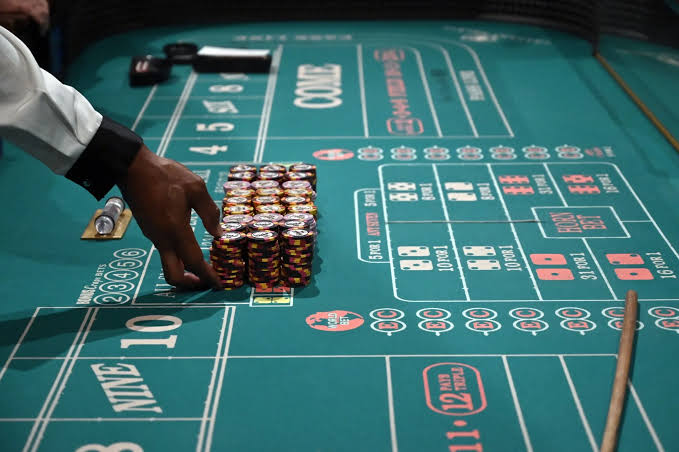
Casino betting strategies are often presented as ways to improve results, manage losses, or make wagering more structured. Behind these strategies are mathematical concepts that help explain how bets behave over time. Probability, expected value, variance, and bankroll management all play a role in determining what a strategy can realistically achieve.
Understanding the mathematics does not make casino games predictable. Instead, it helps players distinguish between a strategy that changes bet sizes and one that genuinely changes the underlying odds.
The Role of Probability in Betting Strategies
Probability measures how likely an event is to occur. In casino games, it depends on the rules, available outcomes, and the specific wager being considered.
For example, European roulette has 37 pockets, numbered 1 through 36 plus a single zero. A straight-up bet on one number has a probability of winning of 1 in 37, or approximately 2.70%.
A winning straight-up wager typically pays 35 to 1. If a player bets ₹100, the net result is a profit of ₹3,500 when the selected number wins and a loss of ₹100 otherwise.
The expected value of this bet is:
Expected value = (1/37 × ₹3,500) + (36/37 × -₹100)
This equals approximately -₹2.70 per ₹100 wagered.
The calculation shows that the average theoretical loss is about ₹2.70 per ₹100 bet over a large number of comparable wagers. It does not mean a player will lose exactly that amount in an individual session.
Fixed Betting and Progressive Systems
Different betting strategies determine how much a player wagers after each result.
Fixed betting keeps the stake constant. A player might wager ₹100 on every round, regardless of whether the previous round was a win or a loss. This makes total wagering and potential exposure easier to track.
Progressive betting changes the stake according to previous outcomes. A negative progression increases the next wager after a loss, while a positive progression may increase the wager after a win.
Consider a simple doubling system that starts at ₹100:
- First loss: ₹100 lost.
- Second loss: ₹200 lost.
- Third loss: ₹400 lost.
- Fourth loss: ₹800 lost.
After four consecutive losses, the total loss is ₹1,500. The next suggested wager would be ₹1,600, assuming the player has enough money and the game permits it.
The example demonstrates how quickly exposure can grow. A progression changes the size and distribution of possible wins and losses, but it does not automatically improve the probability of winning the underlying bet.
Expected Value and the House Edge
Expected value estimates the average financial result of a wager under specified probabilities and payouts.
A positive expected value indicates a theoretical average gain, while a negative expected value indicates a theoretical average loss. In casino games, wagers offered under standard house rules commonly have negative expected value for the player.
The house edge expresses the casino’s mathematical advantage as a percentage of the amount wagered. If a game has a 4% house edge, its theoretical average loss is ₹4 for every ₹100 wagered over a sufficiently large sample, assuming the stated edge applies to the player’s wagers.
A betting strategy should therefore be assessed against the actual game rules, payouts, and wagering volume rather than the number of winning rounds alone.
Why Bankroll Management Matters
Bankroll management concerns how much money a player allocates to gambling and how that money is divided into individual stakes.
Smaller wagers relative to the available budget may allow more rounds before funds are exhausted. Larger wagers increase exposure and can produce sharper changes in the balance.
However, bankroll management does not turn a negative-expectation game into a profitable one. Its primary purpose is to control the amount exposed to risk.
A practical assessment should include:
- The maximum amount available for gambling.
- The stake per round.
- The total expected wagering.
- The maximum acceptable loss.
- Any table limits or minimum bets.
Measuring Strategy Performance
A strategy should be evaluated using more than a short winning streak. Useful measurements include total profit or loss, total amount wagered, return per unit wagered, largest drawdown, and the number of rounds played.
For example, a player who wins ₹500 after wagering ₹10,000 has a return of 5% on that session’s wagering. Another player may win ₹300 after wagering ₹2,000, producing a 15% session return. Neither result alone establishes which strategy has a better long-term expectation.
A fair comparison requires the same assumptions about game rules, payouts, starting funds, and number of rounds.
Conclusion
Mathematical betting strategies provide a structured way to evaluate wagers, track exposure, and understand possible outcomes. Fixed stakes, progressive systems, expected value, and bankroll controls each affect different parts of the betting experience.
The most important distinction is between managing risk and changing the odds. Unless a strategy changes the underlying probabilities or accesses a genuine mathematical advantage, changing bet sizes alone does not remove the house edge.
FAQs
Can a mathematical betting strategy guarantee casino profits?
No. A strategy cannot guarantee profits when outcomes remain uncertain and the wager has a negative expected value.
What is the most important calculation in a betting strategy?
Expected value is one of the most useful calculations because it estimates the average financial result under specified probabilities and payouts.
Does increasing a bet after a loss improve the odds?
No. Increasing the stake changes the amount at risk, not the probability of the next outcome.
Why should betting strategies be tested over many rounds?
Short sessions can be heavily influenced by variance. Larger samples provide more information about how results compare with mathematical expectations.

One thought on “How Mathematical Betting Strategies Work in Casino Games”