Winning at a casino can feel incredible. The moment when the cards fall your way or the slot reels stop on a winning combination can create a rush of excitement. People celebrate, smile, and often tell friends about their lucky moment.
Sometimes those wins are small. Other times they can be surprisingly large.
In fact, casinos around the world pay out millions of dollars in winnings every single day. Many players leave the casino happy and excited about their success.
But behind every exciting win, something very important remains unchanged.
The mathematics of the game.
Casino games are built on probabilities that stay the same no matter what happened yesterday, last week, or even a few minutes ago. A player might win today, but that result does not change the long-term structure of the game.
Understanding this idea helps explain why casinos can pay winners every day and still remain profitable year after year.
Let’s explore why a win today does not change the math behind casino games.
Each Game Round Starts Fresh
One of the most important ideas in probability is independence.
An independent event means that the result of one event does not affect the next one.
Many casino games work exactly this way.
Example: A Coin Flip

If you flip a coin and it lands on heads five times in a row, the next flip still has the same chance as every flip before it:
| Outcome | Probability |
|---|---|
| Heads | 50% |
| Tails | 50% |
The coin has no memory of previous flips.
Casino games operate in a similar way.
For example:
- A roulette wheel does not remember previous spins
- A shuffled deck of cards starts each hand fresh
- Slot machines generate random results every spin
Each round begins with the same probabilities as the one before it.
Even if a player just won a big prize, the next round still follows the exact same mathematical rules.
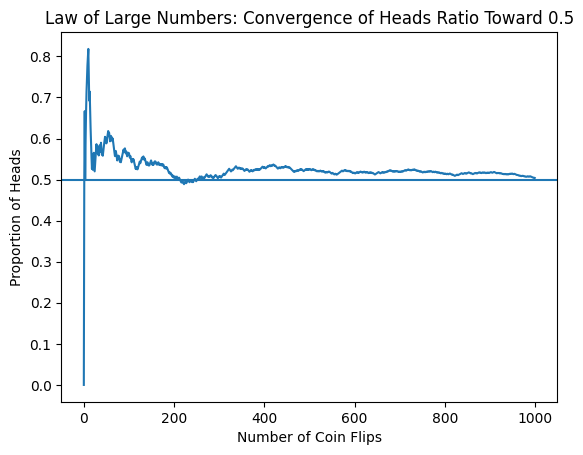
This concept is known as the Law of Large Numbers, a key principle in statistics.
Why Luck Feels Like It Changes The Game
Humans naturally look for patterns.
When someone wins several times in a row, it can feel like something special is happening. Players sometimes believe they are “on a hot streak” or that they have figured out the game.
But mathematically, this feeling is usually caused by random streaks.
Example
Imagine a jar containing 100 marbles:
| Color | Number of Marbles |
|---|---|
| Red | 50 |
| Blue | 50 |
If you pick five marbles randomly, you might get:
Red, Red, Red, Red, Red
That streak might feel unusual, but the jar still contains the same number of red and blue marbles.
The probabilities did not change.
Casino games behave in the same way. A player might enjoy a lucky streak, but the underlying math stays exactly the same.
The Difference Between Stories and Statistics
People love stories about big wins.
If someone hits a jackpot or wins a large amount at a table game, the story spreads quickly. Friends talk about it, and others imagine themselves having the same experience.
Stories focus on individual moments.
Statistics focus on long-term patterns.
Casinos design games based on these long-term patterns.
For example:
| Game | Typical House Edge |
|---|---|
| Blackjack (basic strategy) | ~0.5% |
| European Roulette | ~2.7% |
| Baccarat (banker bet) | ~1.06% |
| Slot machines | 3% – 10% |
The house edge represents the average advantage the casino has over time.
That advantage may not appear in a single session. But over thousands or millions of bets, it becomes very reliable.
Even a tiny advantage can grow significantly when many bets are placed.
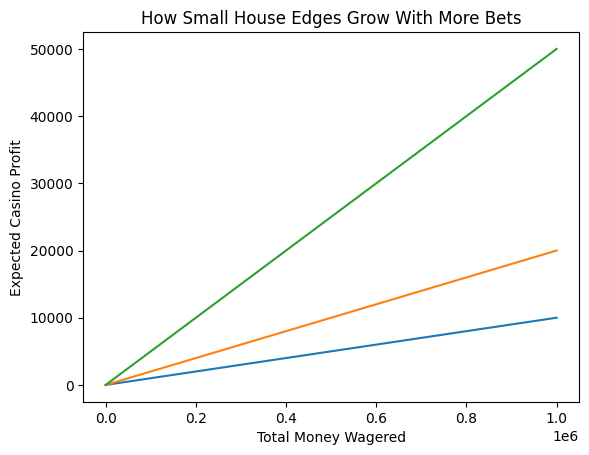
For example:
| Total Wagered | 1% Edge | 2% Edge |
|---|---|---|
| $10,000 | $100 | $200 |
| $1,000,000 | $10,000 | $20,000 |
| $100,000,000 | $1,000,000 | $2,000,000 |
This is why casinos rely on many bets over time, not individual outcomes.
What Real Players Often Notice
Many experienced players eventually recognize this pattern.
Some players share similar observations after years of gambling.
One player described the experience this way:
“Winning early feels amazing, but if I keep playing long enough, the casino usually gets it back.”
Another player commented:
“Casinos don’t need to beat you in one spin. They just let the math work over time.”
These comments highlight an important truth. Winning moments can happen, but they do not change the structure of the game.
Why Casinos Can Pay Winners Every Day
Casinos are not designed to win every single round.
Instead, they rely on large numbers of games over time.
A busy casino may process:
- Thousands of slot spins every hour
- Hundreds of table game hands per hour
- Millions of online wagers per day
Because so many rounds occur, the long-term mathematical advantage becomes very consistent.
This allows casinos to:
- Pay jackpots
- Reward winners
- Still generate profit overall
Understanding The Difference Between A Moment And A Pattern
A single win can feel powerful.
It can create excitement, confidence, and memorable stories. But a single moment is only a tiny part of a much larger statistical pattern.
Think about ocean waves.
One wave might rise higher than the others and crash dramatically on the shore. It stands out for a moment.
But the ocean itself continues moving according to deeper forces like wind and gravity.
Casino games follow a similar idea.
A win today is like a single wave. It can be exciting and memorable.
But beneath the surface, the mathematics guiding the game remains exactly the same.
The Simple Truth Behind Casino Probability
Winning today does not change the math of tomorrow.
Each game begins fresh. The probabilities remain the same. The house edge stays built into the rules.
Players can absolutely experience lucky moments, and those moments are part of what makes gambling exciting.
But the long-term structure of the game never changes.
Understanding this difference between short-term luck and long-term probability helps explain how casinos continue operating year after year while still paying winners every day.
Luck may brighten a moment.
But mathematics quietly continues guiding the game in the background.