If you spend even a little time reading about casino games, you will probably hear the phrase house edge. It appears in many gambling guides and discussions among players. Some people talk about it confidently, while others feel confused by the term.
At first, it might sound like a complicated or secret rule hidden inside casino games. But the truth is much simpler.
The house edge is the small mathematical advantage that a casino has over players in a particular game. It is the reason casinos can stay in business for many years while still paying out millions in winnings every day.
Understanding the house edge helps explain how casino games actually work behind the scenes.
The Simple Idea Behind the House Edge
Imagine a small fair in a town square. There is a booth where visitors throw rings onto bottles. If a ring lands perfectly on a bottle, the player wins a prize.
At first, the game looks easy. Many people feel confident they can win.
But the booth owner has designed the game carefully. The rings may be slightly larger than the bottle necks, and the distance might make accurate throws harder.
Winning is possible, but most players miss.
Over hundreds of attempts, the booth owner collects more money than the prizes they give away.
Casino games work in a very similar way.
The house edge represents the percentage of money that the casino expects to keep over time.
For example:
- If a game has a 2% house edge, the casino expects to keep about $2 for every $100 wagered over many rounds of play.
This advantage is small in a single round, but over thousands or millions of bets, it becomes significant.
A Classic Example: Roulette
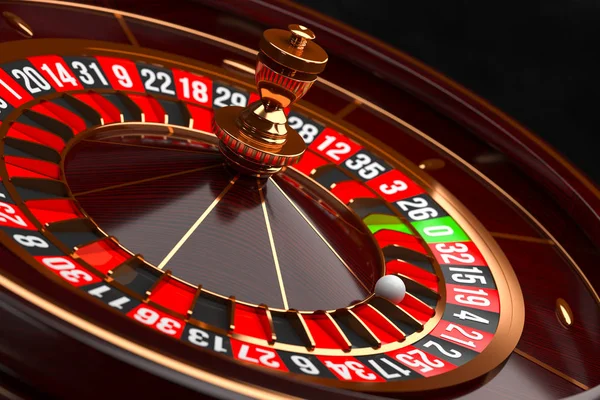
Roulette is one of the easiest games to use when explaining house edge.
A European roulette wheel has 37 slots:
- Numbers 1–36
- One green zero
If a player bets on a single number, the casino pays 35 to 1.
However, the true probability of hitting that number is 1 in 37.
This difference between the payout and the real odds creates the casino’s advantage.
House edge in roulette
| Roulette Type | House Edge |
|---|---|
| European roulette | 2.7% |
| American roulette | 5.26% |
American roulette includes an extra double zero, which increases the casino’s advantage.
That small change almost doubles the house edge.
Slot Machines and House Edge
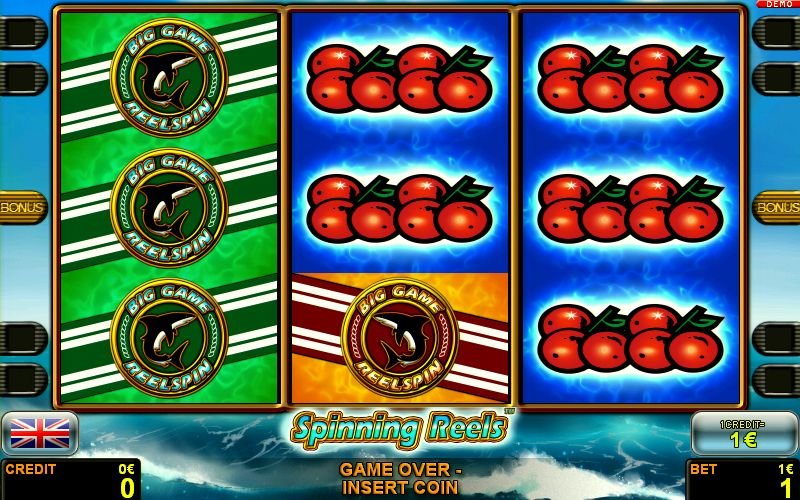
Slot machines work differently from table games.
Instead of physical odds like roulette or dice, slot machines use Random Number Generators (RNG). These computer systems generate thousands of numbers every second.
When a player presses the spin button, the software selects one number that determines the final position of the reels.
Slot machines usually have higher house edges than many table games.
Typical slot machine house edges range from 2% to 10%, depending on the game design.
However, they often offer:
- exciting animations
- frequent small wins
- huge jackpot prizes
These features make them one of the most popular casino games worldwide.
House Edge vs Return to Player (RTP)
Another term often mentioned with house edge is Return to Player, or RTP.
RTP describes how much money a game returns to players over long periods.
For example:
- A slot with 96% RTP returns about $96 for every $100 wagered.
- The remaining 4% is the house edge.
Simple formula
House Edge = 100% − RTP
So if RTP is high, the casino advantage is smaller.
House Edge in Popular Casino Games
Different casino games have different house edges depending on their rules and strategies.
| Game | Typical House Edge |
|---|---|
| Blackjack (basic strategy) | about 0.5% |
| Baccarat (banker bet) | about 1.06% |
| Craps (pass line) | about 1.41% |
| European roulette | about 2.7% |
| Slot machines | 2% to 10% |
Games like blackjack can have extremely small house edges if players use optimal strategy.
That is why many experienced gamblers prefer blackjack or baccarat instead of high-edge games.
Real Player Opinions About House Edge
Players often discuss the house edge in online gambling communities.
One experienced player once wrote:
“Once I learned basic blackjack strategy, I realized the house edge was tiny. But if you play long enough, the math still catches up.”
Another roulette player shared a similar idea:
“Switching from American roulette to European roulette made a big difference. The extra zero really hurts the odds.”
These comments show that some players actively choose games with lower house edges to improve their chances.
Why the House Edge Is Necessary
Some people ask why casinos need a house edge at all.
The answer is simple: operating a casino is expensive.
Casinos must pay for:
- buildings and property
- dealers and staff
- security systems
- gaming licenses and regulation
- entertainment and hospitality services
The house edge creates a steady stream of income that allows casinos to cover these costs.
Without it, casinos could not survive for long.
Short-Term Luck vs Long-Term Math
An important thing to understand is that the house edge works over long periods of time.
Short sessions can produce very different outcomes.
For example:
- A player might win $1,000 during a lucky streak.
- Another player might lose quickly.
- A third player might break even.
All of these results are normal.
But if millions of bets are placed, the results slowly move toward the expected percentages defined by the house edge.
That is why casinos rely on volume of play rather than individual sessions.
The Psychology Behind Casino Games
The house edge operates quietly behind the scenes while players focus on the excitement of the game.
Casino designers carefully create environments that feel exciting and entertaining.
Players experience:
- suspense before a roulette ball lands
- excitement when slot reels stop spinning
- celebration when a winning hand appears
Psychologists often explain that uncertain rewards are highly engaging, which is why games of chance feel thrilling.
The math may favor the casino, but the possibility of winning keeps players interested.
Why Understanding the House Edge Matters
Learning about house edge does not mean gambling becomes less fun.
Instead, it helps players approach games with realistic expectations.
It reminds us that gambling is not purely luck. It is also based on carefully designed mathematics.
Think of it like swimming in a river.
A swimmer may move against the current for a while and even reach the shore. But the water continues flowing in one direction.
The house edge works in the same quiet way.
Some players win. Some lose. Most experiences fall somewhere in between.
But over time, the small mathematical advantage ensures that the casino always has the edge.