
When people visit a casino or open an online casino game, they usually think about luck. They imagine spinning reels, rolling dice, or drawing cards that might bring a big reward.
But behind every casino game there is something quiet and powerful.
Mathematics.
Each game is carefully designed with rules that decide how often players win and how much they can win. Inside those rules lives a built in advantage that belongs to the casino. This advantage is called the house edge.
Some games give the casino only a small advantage. Others give the casino a much larger share of the odds. Understanding these differences reveals why casinos offer many types of games.
What the House Edge Really Means
The house edge is the average percentage of every wager that the casino expects to keep over time.
For example:
- A game with 1% house edge means the casino keeps about $1 for every $100 wagered over the long run.
- A game with 10% house edge means the casino keeps $10 for every $100 wagered.
The key phrase is over the long run. Individual players can win big or lose quickly during short sessions. But across thousands or millions of bets, the math slowly moves in the casino’s favor.
Industry data shows that house edges vary widely depending on the game. For example:
| Casino Game | Typical House Edge |
|---|---|
| Blackjack (basic strategy) | about 0.3% to 2% |
| Baccarat banker bet | about 1.06% |
| European roulette | about 2.7% |
| American roulette | about 5.26% |
| Slots | about 3% to 12% |
| Keno | up to 25% or higher |
These numbers explain why some games are much more profitable for casinos than others.
Visual Comparison of Casino House Edge
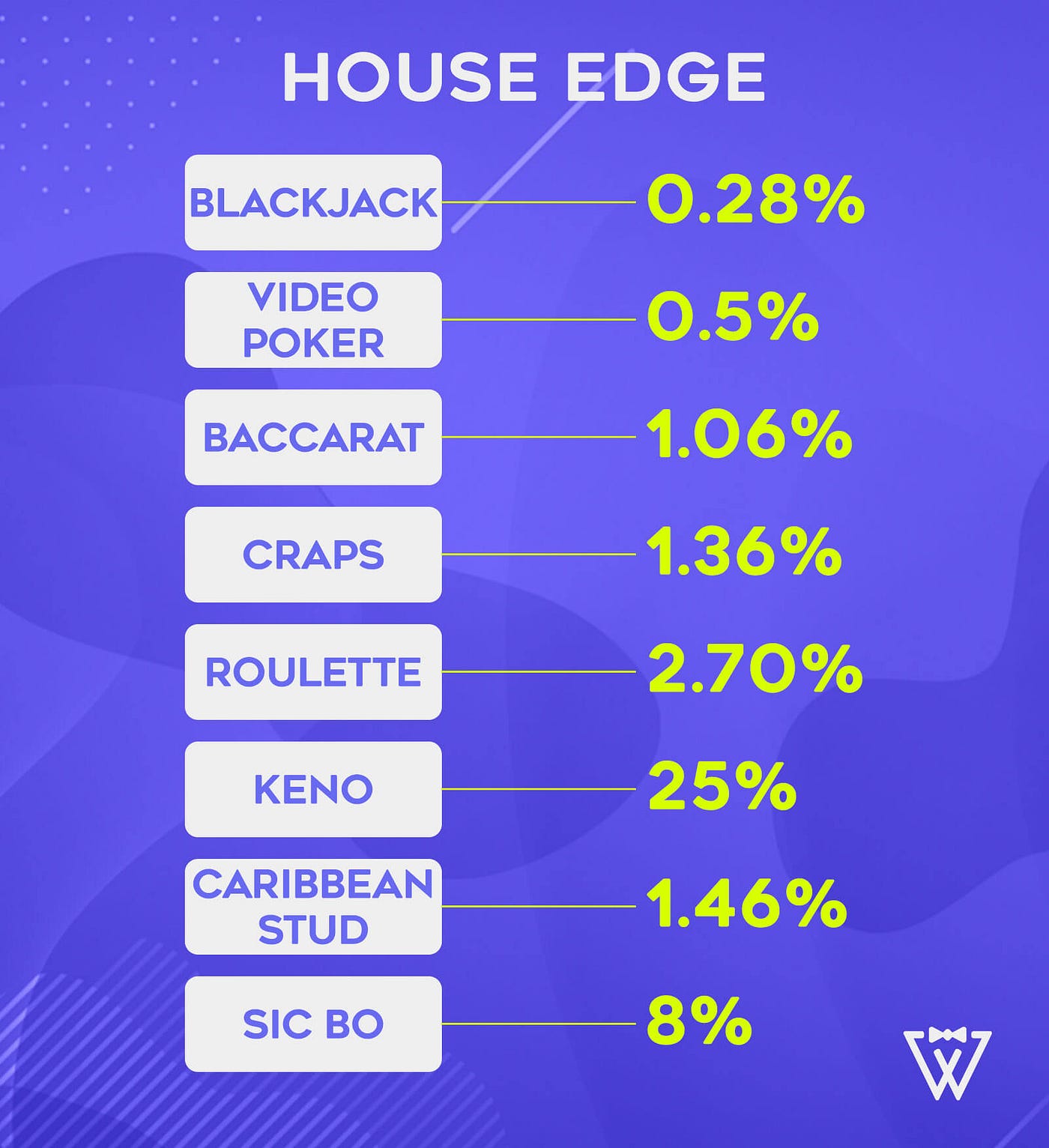
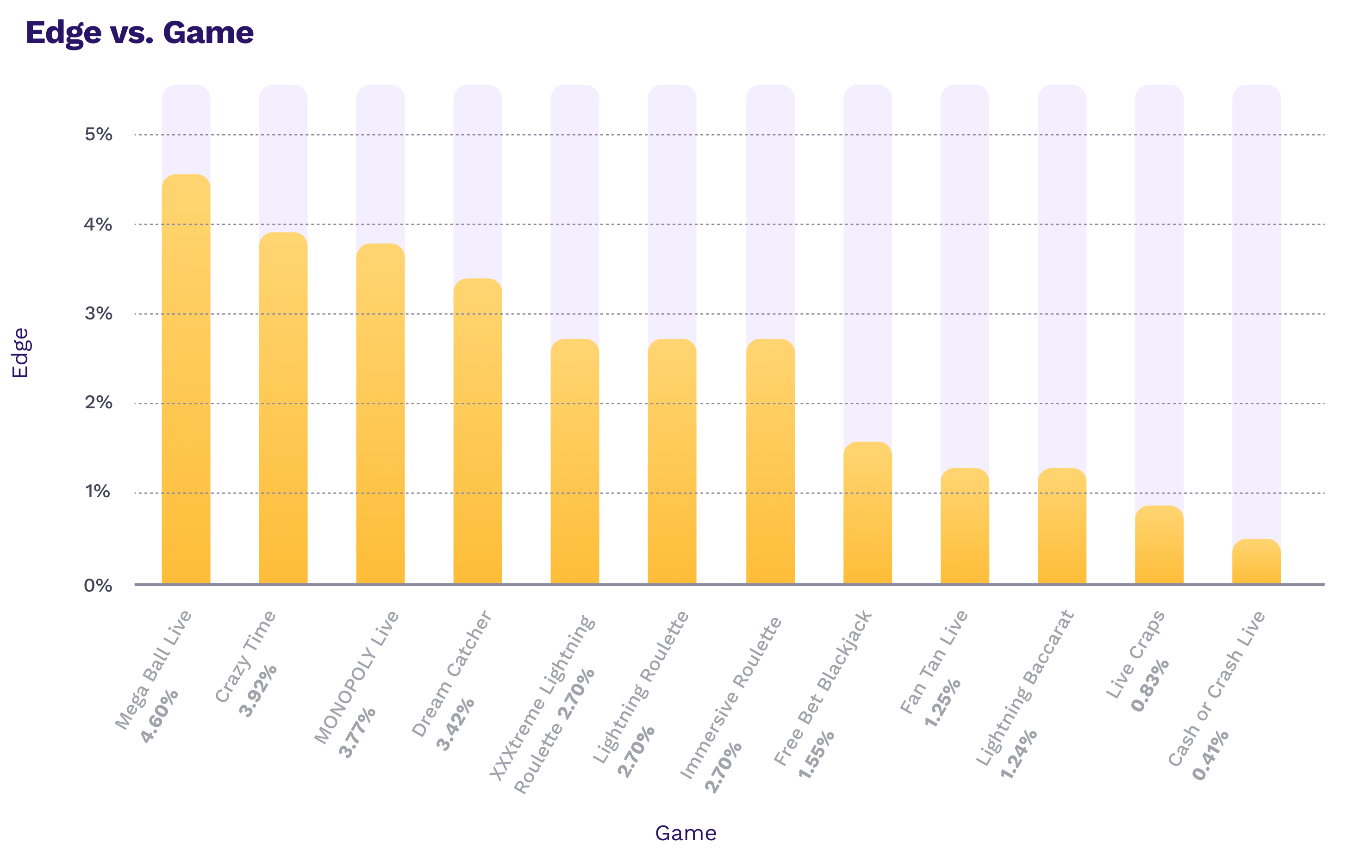
Charts like these show how dramatically house edges differ between casino games. Games such as keno and some slot machines can have very large advantages for the casino, while games like blackjack and video poker can have extremely small edges when played well.
Games That Give the Casino the Biggest Advantage
Certain casino games are known for having the highest house edge. These games are often very simple to play and rely entirely on chance.
Keno
Keno is one of the most profitable games for casinos.
Typical house edge can range from 20% to more than 25% depending on the pay table.
That means for every $100 wagered across many games, the casino may keep about $20 to $25 on average.
A long time casino analyst once summarized it this way:
“Keno is essentially a lottery inside the casino.”
Because the payouts are exciting and jackpots can be large, many players still enjoy it despite the high edge.
Slot Machines
Slot machines are the most popular casino game in the world.
Typical house edges vary widely, usually between 3% and 12%, though some machines can be higher.

Why slots favor casinos strongly:
- Players make hundreds of spins per hour
- Outcomes are fully controlled by software
- Payouts are distributed unevenly through volatility
One casino manager explained it simply:
“Slots are the engine of the casino floor.”
In fact, industry reports often show that slot machines generate more than 70 percent of casino gaming revenue in many major casinos.
American Roulette
Roulette is another game where the house edge depends on the version of the wheel.
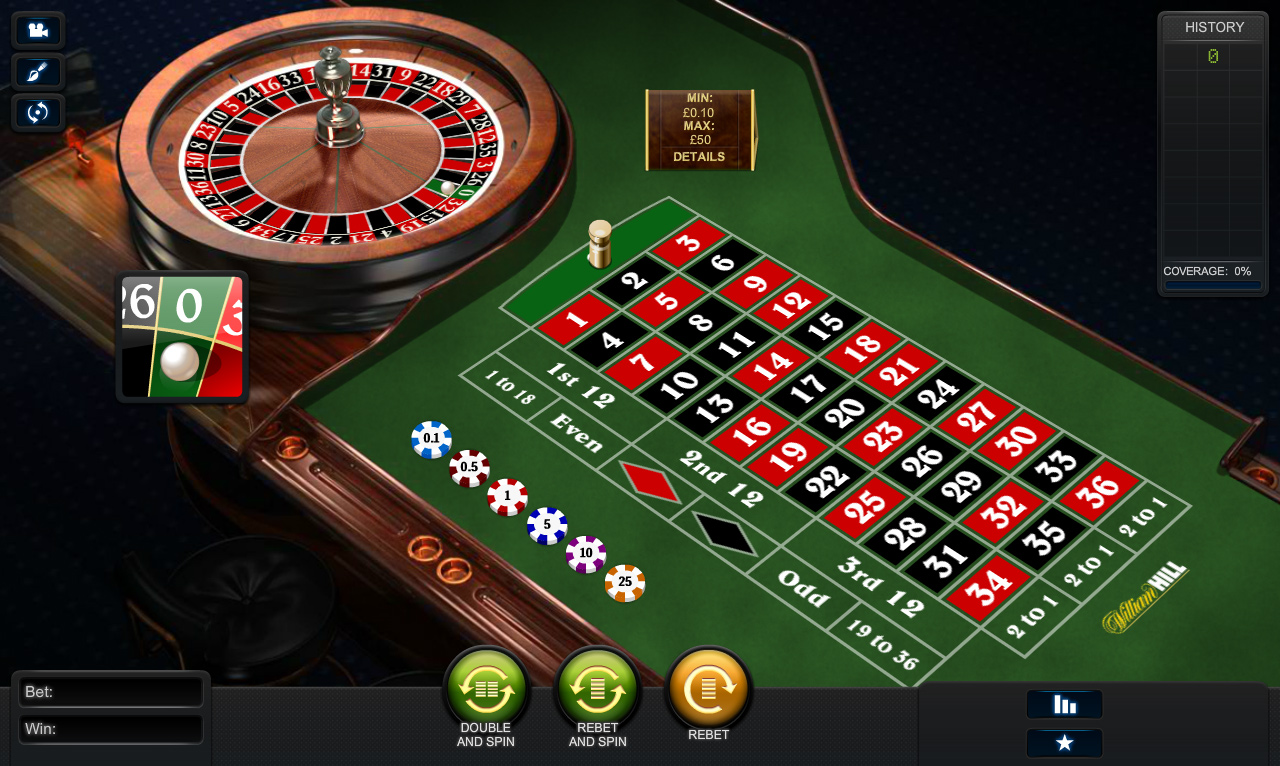
Two common versions exist:
| Roulette Type | House Edge |
|---|---|
| European roulette | 2.7% |
| American roulette | 5.26% |
The difference comes from the extra double zero pocket on the American wheel.
Because of this extra number, the probability shifts slightly toward the casino.
A gambling forum user once explained the feeling many players notice:
“It feels like red or black should be 50 percent. Then you realize the green zero quietly changes the math.”
Games With Smaller Casino Advantage
Not every casino game strongly favors the house. Some games offer much lower edges, especially when players use strategy.
Examples include:
| Game | House Edge |
|---|---|
| Blackjack (optimal play) | about 0.3% |
| Video poker (good pay table) | about 0.46% |
| Baccarat banker bet | about 1.06% |
These games involve decisions that influence outcomes. A player who understands strategy can reduce the house advantage.
For example, blackjack strategy charts are based on probability calculations developed by mathematicians studying optimal play.
A casino statistics expert once noted:
“Blackjack is unusual because player decisions affect the house edge more than in most casino games.”
Why Casinos Offer Both High and Low Edge Games
You might wonder why casinos offer games with small house edges if they are less profitable.
The answer is simple.
Variety attracts different players.
Casinos design their floors to include a mix of experiences:
- Fast, exciting games with larger edges
- Strategic games with smaller edges
- Social table games
- Solo electronic games
This variety keeps the environment interesting and encourages players to stay longer.
Even in games with a low house edge, the casino still holds the long term advantage. Over thousands of rounds, that small percentage continues to generate profit.
A Real Player Observation
One player on an online casino forum summarized the difference between games like this:
“Blackjack feels like you are playing the game. Slots feel like the game is playing you.”
While humorous, the comment reflects a real difference between skill influenced games and pure chance games.
The Quiet Math Behind Every Casino Game
Casinos may look like places of flashing lights and excitement, but the real structure behind them is mathematical.
Every game has a built in edge that ensures long term profitability for the casino.
Some games keep that edge small. Others make it larger.
But the principle never changes.
Each spin, card, or dice roll may feel unpredictable. Yet over thousands of rounds, probability quietly guides the results.
Once players understand the house edge and how it differs between games, the casino floor begins to look less mysterious and much more mathematical.