
Introduction
Casino games are built around numbers, rules, and uncertain outcomes. A roulette wheel can stop on any available pocket, dice can produce different combinations, and card games depend on the cards dealt and the decisions made during play. Although these outcomes may appear unpredictable, probability provides a mathematical way to describe how likely different results are.
For beginners exploring casino mathematics, the most useful starting point is understanding the difference between the chance of winning a particular round and the average financial result of playing repeatedly. These are related concepts, but they do not mean the same thing.
What Is Probability?
Probability measures how likely an event is to happen. It ranges from zero, meaning an event is impossible under the stated conditions, to one, meaning it is certain.
When all outcomes are equally likely, probability can be calculated using a simple formula:
Probability = Number of favourable outcomes ÷ Total possible outcomes
Consider a standard six-sided die. There is one face showing six, and there are six possible faces. The probability of rolling a six is therefore 1/6, or approximately 16.67%.
This calculation assumes that the die is fair and each face has an equal chance of appearing.
Understanding Odds and Probability
Probability and odds are connected, but they express different things. Probability compares favourable outcomes with all possible outcomes. Odds in favour compare favourable outcomes with unfavourable outcomes.
For example, a fair six-sided die has a 1/6 probability of landing on six. The odds in favour are 1:5 because one outcome produces a six while five outcomes do not.
Casino games often present payouts rather than straightforward probability figures. A large payout does not necessarily mean a good mathematical return. The payout must be compared with the actual chance of winning.
Probability in Roulette
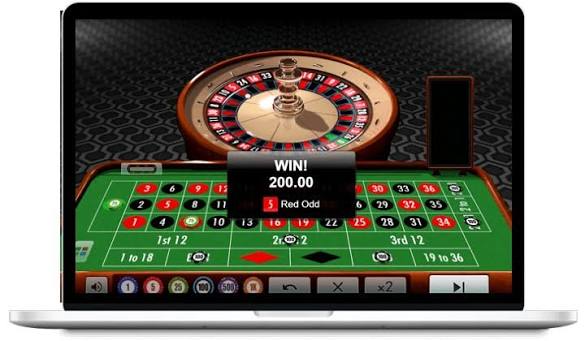
A European roulette wheel has 37 pockets: numbers 1 through 36 and one green zero. If the wheel is fair, every pocket has an equal chance of being selected.
The probability of a single chosen number appearing is:
1 ÷ 37 = approximately 2.70%.
A bet covering 18 red pockets has a probability of 18/37, or approximately 48.65%, of winning. It is not exactly 50% because the green zero is also part of the wheel.
This illustrates an important principle: even bets that appear close to a coin toss may have a mathematical disadvantage built into their payout structure.
Understanding Expected Value
Expected value estimates the average financial result of a wager over many repetitions under the same conditions. It considers both winning and losing outcomes and the probability of each.
Suppose a hypothetical game has a 50% chance of winning ₹100 in net profit and a 50% chance of losing ₹120. Its expected value is:
(0.5 × ₹100) + (0.5 × -₹120) = -₹10.
The negative expected value means the average result is a loss of ₹10 per play over a sufficiently large number of equivalent trials. It does not mean every individual round will produce a loss of ₹10.
What Is the House Edge?
The house edge describes the casino’s mathematical advantage under the game’s rules and payout structure. It is usually expressed as a percentage of the amount wagered.
For example, a game with a theoretical house edge of 3% has an expected loss of ₹3 per ₹100 wagered over the long run, assuming the stated rules and conditions apply. Actual short-term results can differ substantially.
The house edge is not a guarantee of what will happen during one session. It describes a long-run mathematical expectation.
Why Short-Term Results Can Be Misleading
Probability does not guarantee that outcomes will follow an exact pattern over a small number of rounds. A player may win several consecutive rounds, while another may experience a losing streak.
If a fair coin lands on heads five times in a row, the next toss still has a 50% chance of landing on heads, provided the tosses are independent. The coin does not need to produce tails to compensate for previous results.
Believing that a particular outcome is now overdue is known as the gambler’s fallacy.
Conclusion
Probability helps explain how likely casino outcomes are, while expected value and house edge explain the financial mathematics behind payouts. Together, these concepts provide a clearer way to evaluate game rules without confusing a possible win with a favourable long-term expectation.
The essential lesson is simple: knowing the odds does not predict the next result, but it can explain the structure of the game and the risks involved.
Frequently Asked Questions
What is the simplest way to calculate probability?
When outcomes are equally likely, divide the number of favourable outcomes by the total number of possible outcomes.
Is a 50% chance of winning the same as a fair game?
No. A game can offer a 50% chance of winning but still have a negative expected value if the losing amount is greater than the winning profit.
What does house edge mean?
House edge is the casino’s theoretical mathematical advantage, expressed as a percentage of the amount wagered.
Can probability predict the next casino result?
Probability describes likelihood, not certainty. It cannot reliably predict the next outcome of a genuinely random, independent event.
Why should beginners learn casino mathematics?
It helps them understand odds, payouts, uncertainty, and expected losses without relying on misleading patterns or promises of guaranteed wins.


One thought on “A Beginner’s Guide to Probability in Casino Games”