
Introduction
Every casino game has a set of possible outcomes. Some outcomes happen more frequently than others, while some are relatively rare. Probability provides a consistent method for describing these differences and understanding the mathematical structure behind a game.
Knowing how probability works does not make uncertain results predictable. Instead, it helps explain why a particular outcome is more or less likely, how payouts relate to winning chances, and why a short winning streak does not necessarily indicate a lasting advantage.
Starting With Possible Outcomes
The first step in calculating probability is identifying the possible outcomes. In a simple game with equally likely results, the calculation is straightforward.
For example, a standard die has six possible faces. The probability of rolling an even number is 3/6 because the favourable faces are 2, 4, and 6.
The probability is therefore 50%.
However, not every casino game has equally likely outcomes. Card games change as cards are dealt, and digital games may use complex probability distributions. In those situations, the underlying rules and probabilities must be understood before calculating the chance of a result.
How Probability Works in Roulette
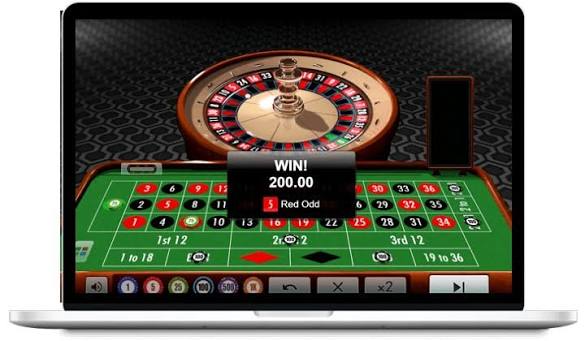
Roulette provides a clear example of how the number of available outcomes affects probability.
A European wheel has 37 pockets, including a single zero. Each pocket has a probability of 1/37, assuming a fair wheel.
A bet on one specific number therefore has a probability of approximately 2.70% of winning. A bet on red covers 18 pockets and has a probability of 18/37, or approximately 48.65%.
The difference between 48.65% and 50% may appear small, but it matters when comparing the mathematical probability with the payout offered.
Multiple Events and Dice
When several events occur together, probability calculations depend on whether the events are independent.
Suppose two fair six-sided dice are rolled. Each die has six possible results, producing 36 equally likely ordered combinations.
Only one combination, six and six, produces two sixes. The probability is therefore 1/36, or approximately 2.78%.
This calculation is useful because combinations can be less likely than individual results. Rolling a six on one die is much more common than rolling six on both dice at the same time.
Probability in Card Games
Card games require additional care because the composition of the deck can change during play.
A standard deck contains 52 cards, including four aces. Before any cards are dealt, the probability of drawing an ace from a well-shuffled deck is 4/52, or approximately 7.69%.
After an ace is drawn and not returned to the deck, the probability changes. There are now three aces among 51 remaining cards, so the probability of drawing another ace on the next draw is 3/51.
This is an example of conditional probability: the chance of an event depends on what has already happened.
How Probability Relates to Payouts
A game may offer a large payout for a rare outcome or a smaller payout for a more common one. To evaluate the mathematics, the probability of each outcome must be considered alongside the amount won or lost.
Expected value combines these elements into one measure of average financial outcome. It does not tell you what will happen in the next round, but it reveals whether the payout structure is favourable or unfavourable on average.
A game with frequent small wins can still have a negative expected value if occasional losses outweigh those wins.
Randomness and Previous Results
In games with independent rounds, previous results do not change the probability of the next round. If a fair roulette wheel has landed on black several times, red is not automatically more likely on the next spin.
The same idea applies to a properly functioning random digital game when each outcome is independently generated according to its rules.
Card games can be different because dealt cards change the remaining deck. The correct analysis depends on the game rather than a universal assumption that every round is independent.
Using Probability Responsibly
Probability calculations are useful for education and comparison, but they cannot remove uncertainty or guarantee profit. A mathematically correct calculation still depends on accurate assumptions about the game.
Anyone studying casino mathematics should check the rules, payout conditions, and whether the stated probabilities apply to the specific version being examined. It is also important to distinguish theoretical averages from the results of an individual session.
Conclusion
Probability works by describing the likelihood of outcomes under defined conditions. Roulette demonstrates how outcomes are counted, dice illustrate combinations, and card games show how previous events can change later probabilities.
Understanding these differences makes casino mathematics easier to interpret. The goal is not to predict every result, but to understand what the numbers actually say and what they cannot promise.
Frequently Asked Questions
Does probability work the same way in every casino game?
The basic principles are consistent, but the calculations depend on the game’s rules, possible outcomes, and whether previous events affect future results.
What is conditional probability?
Conditional probability measures the chance of an event when some other information is already known, such as which cards have been dealt.
Why can a game have frequent wins but a negative expected value?
The value of losses and the payout structure may outweigh the amount returned through winning outcomes.
Do previous roulette results affect the next spin?
Not in a properly functioning roulette game where spins are independent. Previous results do not make a particular number due.
Can probability help compare casino games?
Yes. It can help compare winning chances and theoretical returns, provided the rules and payout assumptions are accurate.

One thought on “How Probability Works When Playing Casino Games”