

Introduction
Randomness is a central feature of many casino games. A roulette ball lands in one pocket, dice settle on particular faces, and digital games produce outcomes according to programmed rules. Although the results may appear unpredictable, each game operates within a mathematical framework that determines which outcomes are possible and how likely they are.
Understanding randomness helps explain why patterns can appear during short sessions without necessarily indicating that a game is predictable. It also clarifies the role of probability, software, and independent testing in modern digital games.
What Does Randomness Mean?
An outcome is random when its exact result cannot be reliably determined in advance from the information available, even though the possible outcomes and their probabilities may be known.
Consider a fair six-sided die. The possible outcomes are 1, 2, 3, 4, 5, and 6. Each has a probability of 1/6. Knowing these probabilities does not reveal which number will appear on the next roll.
This distinction is important: randomness does not mean that a game has no mathematical structure. It means that the individual result is uncertain within that structure.
Physical Randomness in Casino Games
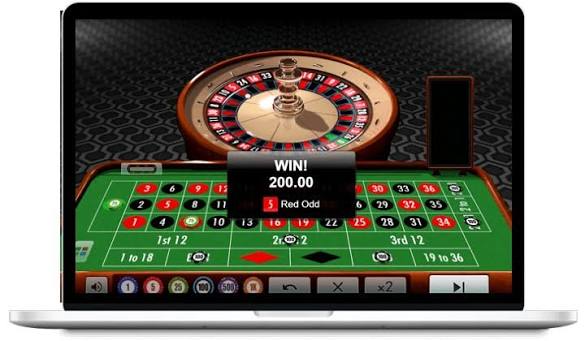
Traditional casino games can use physical processes to produce outcomes. Roulette depends on the movement of a wheel and ball, while dice games rely on the physical motion of dice.
In a properly operated game, the equipment and procedures are designed to support fair outcomes. However, physical processes can be affected by mechanical conditions or improper handling, which is why equipment maintenance and appropriate oversight matter.
The mathematical model usually assumes that each relevant outcome has a specified probability. Whether real equipment follows that model closely enough is a separate question that requires testing and observation.
Random Number Generators in Digital Games
Online games commonly use software-based random number generators, or RNGs, to produce outcomes. An RNG generates values that the game maps to possible results according to its design.
For example, a digital dice game might convert a generated value into one of six possible faces. A slot-style game may use a more complex mapping to determine symbol combinations and prizes.
A well-designed and properly implemented system should follow its documented probability rules. Independent technical testing may examine the generator, how outcomes are mapped, and whether the implementation behaves as intended.
Not every random number generator works in the same way. Some systems use deterministic algorithms designed to produce pseudorandom sequences, while other applications may incorporate physical sources of randomness.
Are Previous Results Connected to Future Outcomes?
In an independent sequence, the result of one event does not change the probability of the next. If a fair die lands on four, the probability of rolling four again remains 1/6 on the next independent roll.
This does not mean that every sequence will look evenly distributed. A die can produce the same number several times in a row without violating probability theory.
Card games require a different analysis. When cards are dealt from a deck without being replaced, the available cards change. The probability of the next draw therefore depends on which cards remain.
Understanding whether outcomes are independent is essential before drawing conclusions about patterns.
Why Random Results Can Look Unusual
People often expect random sequences to alternate between different outcomes. In reality, random sequences can contain clusters and streaks.
Imagine tossing a fair coin 20 times. A sequence containing several consecutive heads is entirely possible. The existence of that streak does not establish that the coin is unfair.
The same principle applies to digital games. A series of similar results may occur by chance, particularly when many rounds are observed. A small sample is usually insufficient to establish whether a game follows its stated probabilities.
How Randomness Is Tested
Testing may involve reviewing software, examining system controls, analysing large samples of outcomes, and comparing observed frequencies with expected distributions.
For example, if a fair six-sided die is rolled thousands of times, each face should appear approximately one-sixth of the time over a sufficiently large sample. The observed counts will not necessarily be identical.
Statistical tests can help determine whether differences are consistent with ordinary sampling variation or provide reason for further investigation. No single test proves every aspect of a system’s fairness, so technical review often includes multiple checks.
Randomness Does Not Remove the House Edge
A game can generate random outcomes fairly while still having a negative expected value for the player. Randomness concerns how outcomes are produced; expected value concerns the financial results associated with those outcomes.
For instance, a roulette wheel can produce outcomes according to the correct probabilities while its payout structure gives the casino a mathematical advantage.
Fair randomness and favourable payouts are therefore separate concepts. Understanding one does not automatically establish the other.
Conclusion
Randomness determines individual outcomes within the rules of a game, while probability describes how likely those outcomes are. Physical equipment, software-based generators, and card-deck composition can all affect how outcomes should be analysed.
The most important lesson is that a random result can look unusual without being evidence of manipulation. Reliable conclusions require understanding the game mechanics, checking the stated assumptions, and using appropriate statistical and technical testing.
Frequently Asked Questions
What makes a casino game random?
A game is designed to produce uncertain outcomes according to defined rules and probabilities. The method may involve physical processes or software-based random number generation.
What is an RNG in online casino games?
An RNG is a random number generator that produces values used to determine digital game outcomes.
Can random games produce long winning or losing streaks?
Yes. Streaks are possible in random sequences and do not automatically indicate that the game is faulty.
Does a random game guarantee fair payouts?
No. Randomness and payout fairness are different issues. The payout structure must also be examined to understand the expected financial result.
How can the randomness of a digital game be evaluated?
Evaluation may include software inspection, statistical testing, implementation checks, and independent technical assessments.

One thought on “How Randomness Determines Casino Game Outcomes”